

Seeds and spores need water, water needs seeds and spores. This simple truth underlies what we now describe as blue and green water. Blue water flows through rivers, lakes, and aquifers — visible, measurable, and contested. Green water lives in soils, roots, and biomass — quiet, local, and sustaining. Seeds and spores are the bridge between the two. They turn rainfall into resilience, flow into fertility, and weather into memory. When that bridge erodes, water becomes unstable, and food systems soon follow.
In Arizona, developers proposing a subdivision (typically six or more lots) must demonstrate that there is an Assured Water Supply — enough water to reliably serve the development for at least 100 years — before the development can be approved and sold. This isn’t just a guideline in the news article, it’s part of a long-standing state law tied to water resource planning and subdivision regulation.
Water is one of those things that hides in plain sight. It is everywhere in language and nowhere in attention. We speak of money, resources, assets, inputs, allocations, offsets, credits, efficiency. Yet remove water from the equation and life itself collapses with astonishing speed. Three or four days without water and a human body ceases to function. No ideology survives that timescale. No accounting framework spans it. No token, no promise, no future compensation matters when circulation stops. And yet water is hardly discussed in mainstream media unless there is a catastrophe - drought/floods etc.
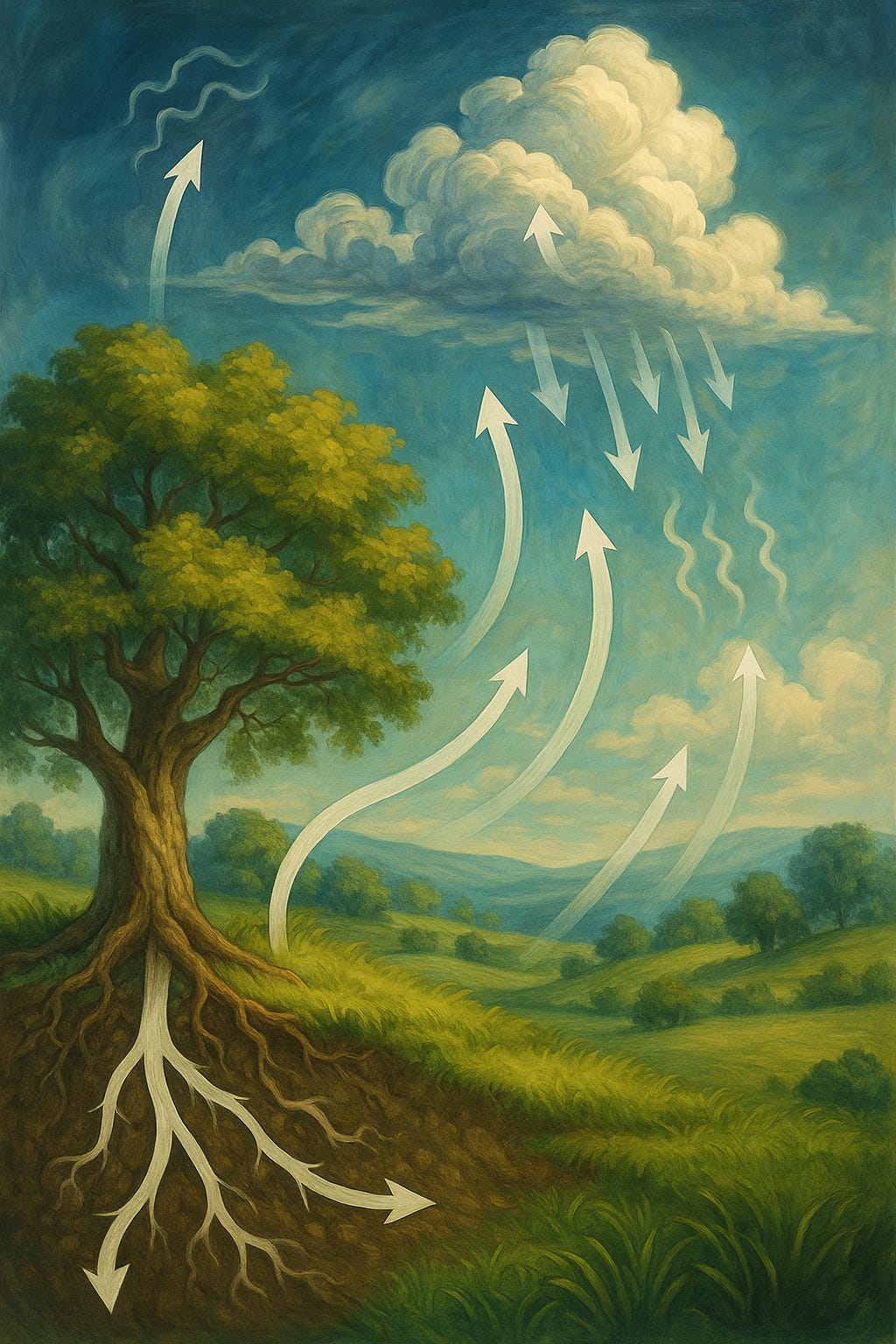
That simple physiological truth is not a metaphor. It is the foundation on which all ecological and social systems rest. Water is not an abstract commodity that can be shifted, delayed, or neutralized. It is medicine to every life-form that requires it. Dosage matters. Timing matters. Place matters. Substitution fails. Absence kills. In that sense, water planning is far closer to medicine than to finance, and the failure to recognize this distinction underlies many of the tensions now emerging across climate policy, infrastructure expansion, and so-called “net-zero” transitions.
Blue Water - Green Water
In recent years, planners and scientists have increasingly distinguished between what is often called blue water and green water. Blue water refers to the visible, extractable flows we are accustomed to managing: rivers, reservoirs, lakes, and aquifers. Green water refers to water held in soils, cycled through plants, and returned to the atmosphere via evapotranspiration. It is the water that feeds crops, forests, and grasslands. It is the water that sustains ecosystems between rains. It is also the water most easily overlooked, because it does not move through pipes or appear on balance sheets.
This distinction is not academic. It reflects two very different relationships with time. Blue water is urgent. It moves, it flows, it can be depleted quickly. Green water is patient. It is stored, buffered, remembered in soils and root systems. Together they form a living continuum: circulation and storage, immediacy and memory. Seeds embody a similar pairing. They are deferred life, capable of waiting months or decades for the right conditions. Water is immediate life. Without it, seeds remain dormant. Without seeds, water alone produces no future.
Modern water planning has tended to privilege blue water because it is legible to institutions. It can be measured at intake points, regulated through permits, traded between users, and engineered through centralized infrastructure. Green water, by contrast, resists abstraction. It depends on soil structure, organic matter, vegetation cover, slope, subsurface geology, and the slow work of biological communities. It is deeply local. It does not behave the same way in two different places, even under identical rainfall. One current example of the fallacies of human domination of water flows in nature is the “plight” of the Colorado River in the USA and to a lesser extent, Mexico. To be more succinct the plight is being felt by animals and humans depending on predictable water flows, from the Colorado.

Watershed Terrestrial Subsurface Importance
Recent research has reinforced just how consequential these hidden differences are. Studies of watersheds with similar climates have shown radically different responses to wet and dry periods depending on their subsurface architecture. Patchy permeability, fractured bedrock, soil depth, and internal connectivity can determine whether water is routed quickly to streams or held slowly in storage. These underground structures act as a form of hydrological memory, shaping how past conditions influence future availability. Two basins can receive the same precipitation and experience entirely different outcomes months later. This can be particularly impactful in Industrial Agriculture planning, where predictable outcomes are a key need.
This finding should not surprise us, yet it challenges a great deal of planning practice. Many models implicitly assume that watersheds behave like scaled containers: rainfall in, runoff out, averaged over time. But living landscapes are not buckets. They are organs. They have internal structure, feedback loops, thresholds, and failure modes. They can compensate for stress up to a point, and then flip abruptly. When planning ignores this complexity, it often overestimates resilience and underestimates risk.
The emergence of “One Water” frameworks represents a genuine attempt to correct some of these blind spots. The core insight of One Water is that drinking water, wastewater, stormwater, surface water, and groundwater are not separate systems but facets of a single cycle. In principle, this is a powerful shift. It opens the door to reuse, infiltration, green infrastructure, and demand reduction as integrated strategies rather than afterthoughts. “One Water is defined by the Water Research Foundation (WRF) as an integrated planning and implementation approach to managing finite water resources for long-term resilience and reliability, meeting both community and ecosystem needs. It is the emerging term in the United States for what is commonly known as integrated urban water management. Given Central Texas’ population growth and limited water resources, One Water principles are becoming more and more viable options to extend and protect water supplies.”
Yet even One Water often stops short of fully embracing green water as first-class infrastructure. Soil moisture, vegetation uptake, and subsurface storage are acknowledged rhetorically but rarely governed with the same seriousness as pipes and plants. The reasons are partly technical, partly political. Green water blurs departmental boundaries. It implicates land use, food systems, and ecology. It challenges the assumption that all water value can be captured through centralized control.
Data Center Demands
These tensions are becoming more acute as new forms of infrastructure exert pressure on water systems. Large data-centre build-outs are currently a particularly revealing case. Data centres are often treated as energy problems, yet they are also water systems. They demand extreme reliability, cluster geographically, and increasingly seek access to reclaimed or high-quality water for cooling. Their growth patterns are step-wise rather than incremental, distorting long-range forecasts and reuse allocations. This is a good article on data center water challenges.
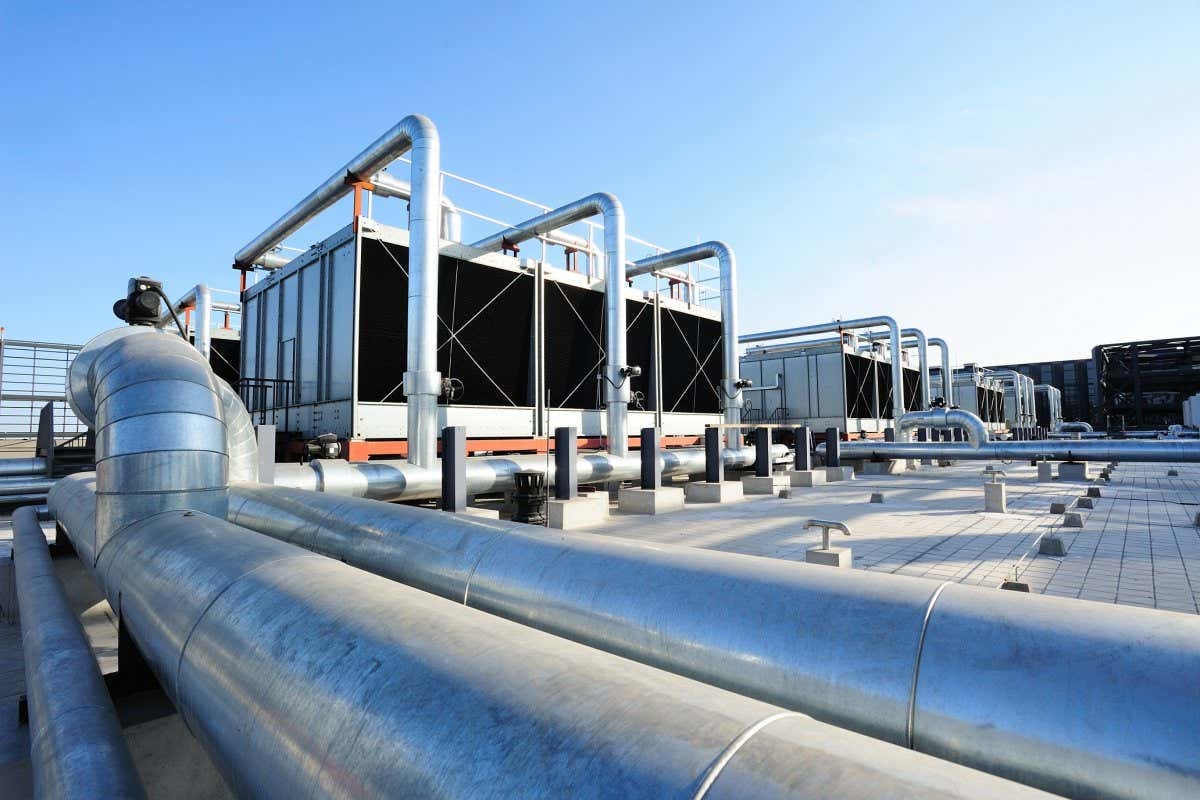
In many jurisdictions, data centres are approved through bespoke arrangements that sit alongside, rather than within, integrated water planning. Water contracts are negotiated bilaterally. Impacts are externalized spatially or temporally. One Water plans are revised after commitments are made, not before. This is not usually framed as opposition to ecological planning; it is framed as exception, competitiveness, or necessity. The result is bypass without confrontation.
Another quick comment on the subject of AI; it is not just AI systems which can hallucinate. In many ways, some human beings have been doing so for years, hence many of our current systems problems. We touch on this below.
Net-Zero & Tokenization Challenges
This pattern becomes even more concerning when paired with the rise of net-zero and tokenization frameworks. The language of offsets, neutrality, and credits has migrated from carbon into water discourse with remarkable speed. The intention is accountability, yet the structural mismatch is profound. Carbon is global and atmospheric. Water is local, temporal, and basin-specific. Treating water as offsettable introduces a dangerous fiction: that depletion in one place can be compensated for elsewhere or later. As we pointed out earlier, water is notoriously difficult to control and/or predict.
For instance, in recent drought years, especially 2022–2025, portions of the Mississippi River have fallen to unusually low levels at key gauges such as Memphis and Cairo, driven by lack of precipitation and lower tributary contributions. The river has dropped well below historical norms in several of those years, creating navigation challenges and economic impacts. More information can be found here on the current situation and impacts
Tokenization accelerates this abstraction. When impacts can be priced, traded, and neutralized on paper, incentives shift. Demand grows faster than ecological repair because repair becomes something that can be purchased rather than practiced. Time is stretched. Today’s extraction is balanced against tomorrow’s promise. But aquifers do not accept IOUs. Soils do not recharge on quarterly cycles. Hydrological memory does not respond to financial instruments.
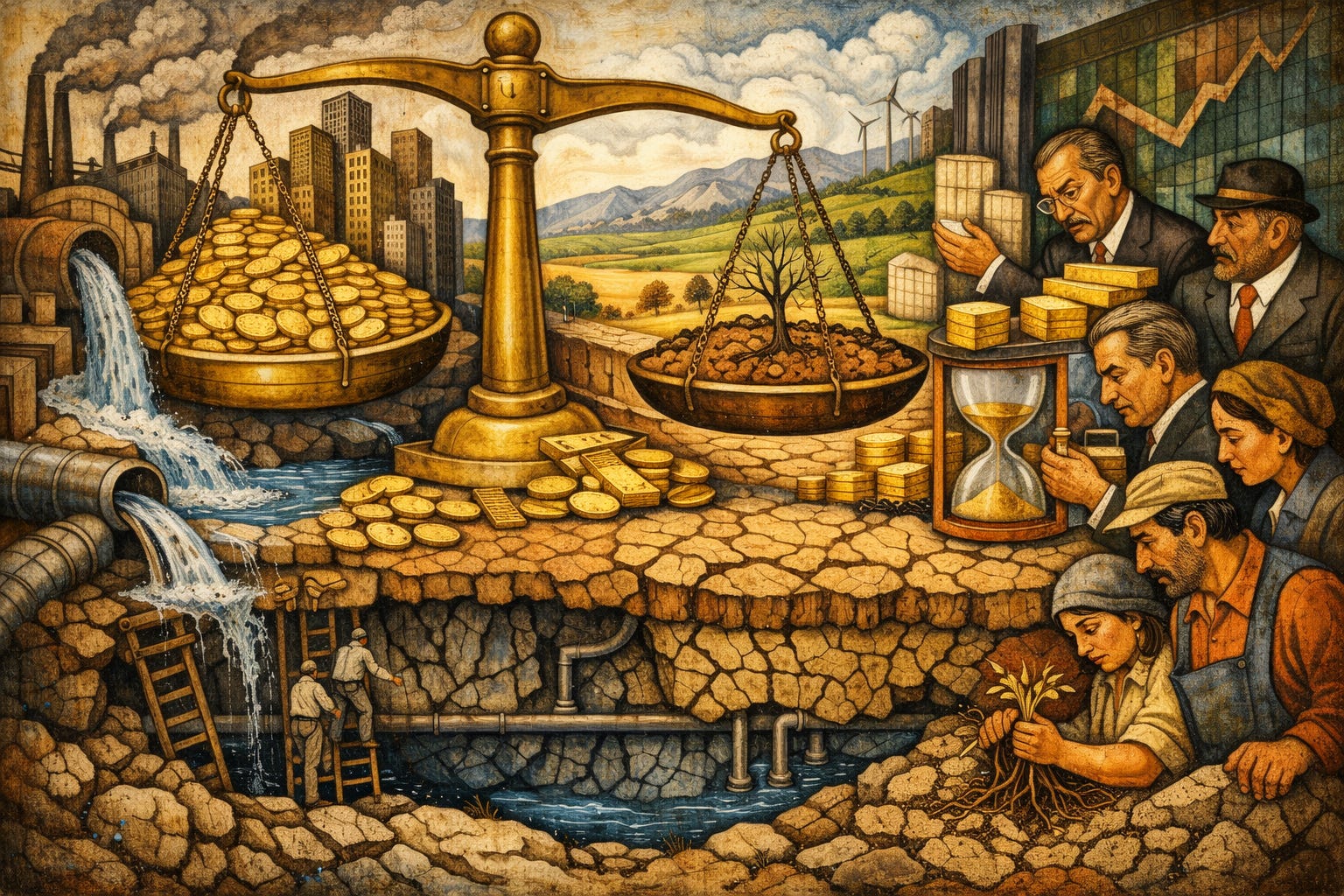
What emerges is a parallel authority: financial legitimacy without hydrological legitimacy. Decisions are justified upward to investors and dashboards rather than inward to basins and communities. Planning frameworks remain in place, cited and referenced, but no longer decisive. This is how ecological governance is hollowed out without being dismantled.
Human Hallucinations.
At this point it is tempting to frame the problem as malice or greed, but that would miss the deeper issue. Most bypasses do not arise from villainy. They arise from instrumental cleverness divorced from consequence. From language that optimizes compliance rather than care. From systems that hallucinate heavily and resist correction.
Humans hallucinate continuously. Perception itself is a controlled hallucination constrained by feedback. Vision predicts and fills gaps. Memory reconstructs. Identity narrates. These hallucinations are not flaws; they are how cognition works. The danger comes when feedback is weakened or delayed. Healthy systems hallucinate lightly and correct often. Failing systems hallucinate heavily and punish correction.
Water is one of the most powerful correctives to hallucination we have. It does not respond to belief. It responds to gravity, heat, soil, and time. Drought punctures fantasy. Thirst collapses ideology in days. That is why water keeps drawing us back to bodily timescales. It refuses abstraction beyond a narrow margin.
Seen in this light, blue–green water thinking is not a technical refinement but an ethical orientation. It asks us to recognize which forms of water are negotiable and which are not. Blue water can be allocated, within limits. Green water must be tended. It cannot be offset without losing function. It is living capital, not a ledger entry.
This has implications far beyond hydrology. It touches food security, urban design, climate adaptation, and the future of computation itself. Seed banks and data centres represent two very different resilience logics. One stores diversity patiently in small, distributed units. The other concentrates capacity for speed and scale. Both claim importance. Only one aligns naturally with the timescales of water and soil.
None of this implies a rejection of technology or planning. It implies boundaries. In medicine, prevention is valued over heroic intervention. Dosage matters. Context matters. No two patients are identical. Water planning demands the same humility. Infiltration beats extraction. Soil moisture beats emergency pumping. Slow recharge beats crisis engineering.
When water is treated primarily as a financial variable, these truths are inverted. Scarcity is managed after limits are crossed rather than before. Damage is compensated rather than avoided. Planning becomes explanatory rather than protective. This is not sustainability; it is deferred reckoning.
There is another path, quieter and less glamorous. It treats soils as infrastructure, vegetation as storage, and food-growing landscapes as demand-reducing assets. It locks accountability to place. It refuses fungibility where physics forbids it. It accepts that some things cannot be tokenized without being destroyed.
This path does not eliminate hallucination. It keeps it tethered. It allows stories to exist, but insists they answer to water in the ground, to plants in the soil, to bodies that thirst. It recognizes that while finance can wait, water cannot. That difference tells us which systems are real.
Perhaps the most important thing to say, after all the modeling and policy and abstraction, is the simplest. Each of us is only a few days away from the truth of water. That is not a vulnerability to be engineered away. It is a teacher. It reminds us that planning, at its best, is not about maximizing returns but about keeping the patient alive.
Water is not merely a resource. It is circulation. It is memory. It is medicine. And any system that forgets this will eventually be corrected — not by argument, but by absence.
Capitulism To Be Avoided
Capitulism - A cultural condition in which societies gradually surrender long-term ecological and social resilience to short-term financial success signals — often unintentionally.
Seedascity - A natural condition which predates human society by more than 400 million years. Which also supports almost all forms of terrestrial life and which improves soils with synchronicity.
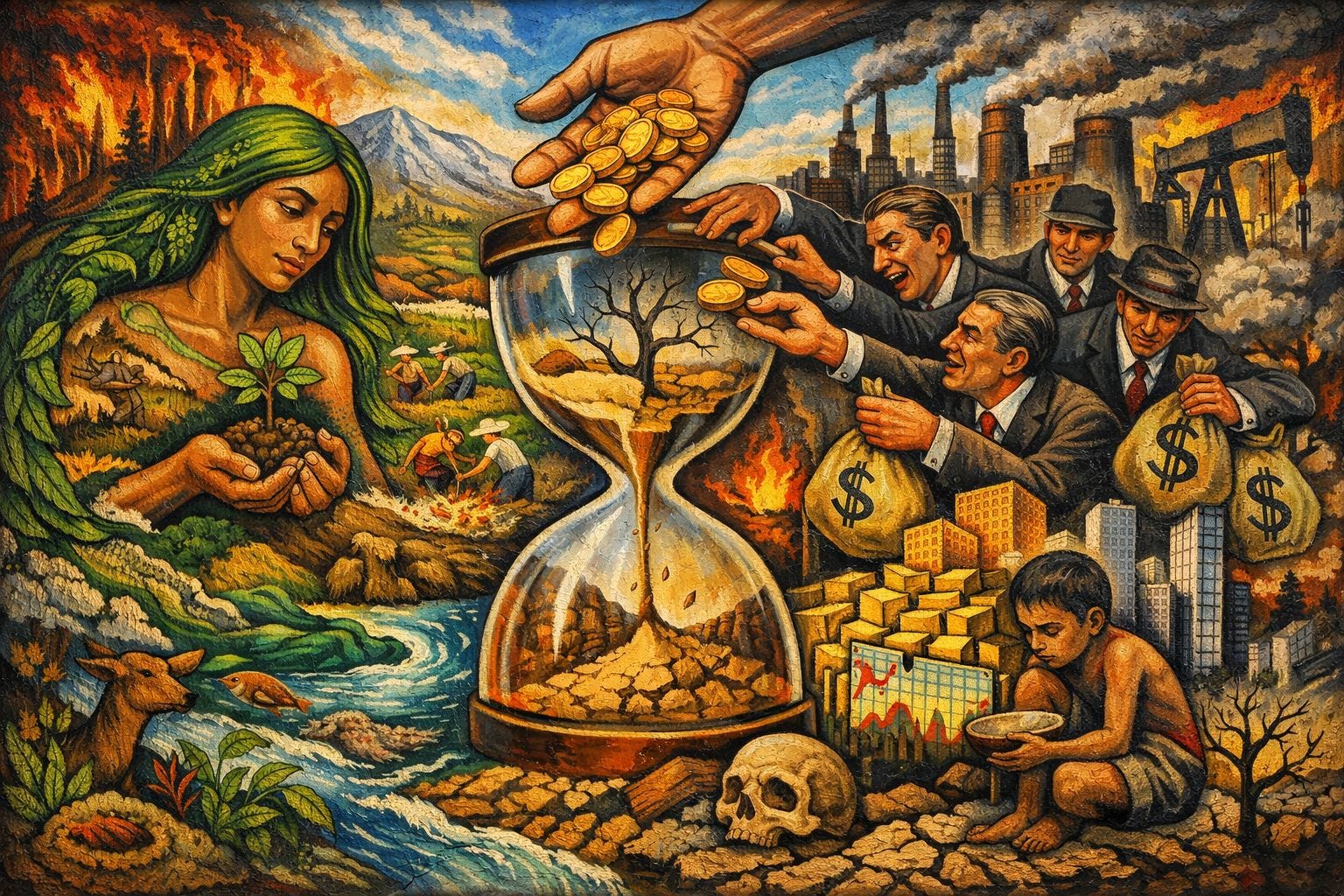
Seeds are true value in abundance. Thank you as always for reading this.